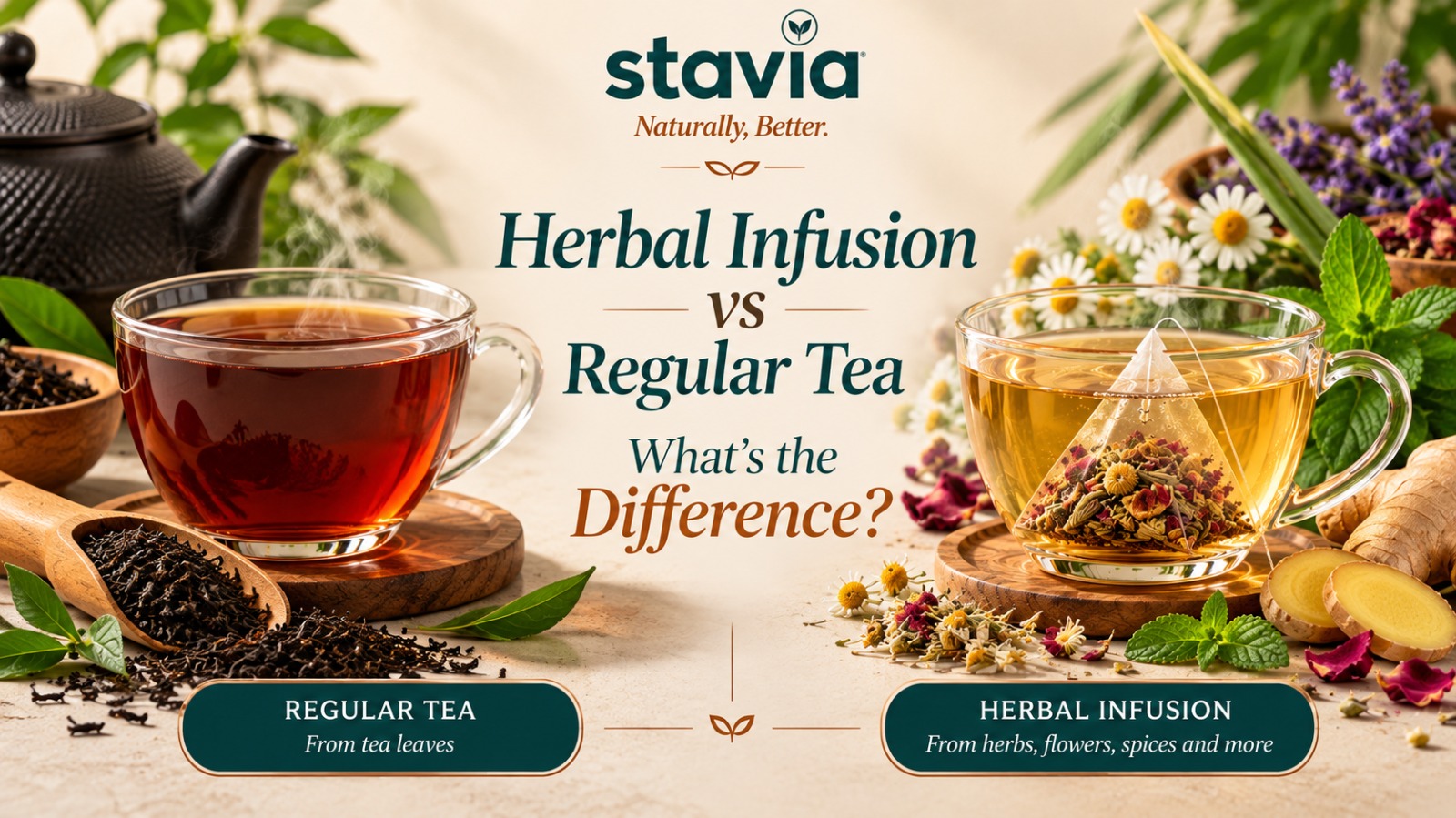
Herbal Infusion vs Regular Tea: What’s the Difference?
Discover the differences in ingredients, flavour, caffeine and brewing—and find the cup that suits your taste.
Tea is part of everyday life, enjoyed in countless homes and cultures. But not every drink called “tea” comes from the same plant. Traditional tea and herbal infusions differ in their ingredients, flavour profiles, caffeine content and brewing characteristics.
At STAVIA, we celebrate the diversity of botanicals and the simple pleasure of discovering a cup you enjoy. Here’s a closer look at what makes these beverages different.
1. What Is Regular Tea?
Traditional tea comes from the leaves of a plant called Camellia sinensis. Black tea, green tea, white tea and oolong tea all come from this same plant. Their differences arise largely from how the leaves are processed.
- Black tea: A robust flavour with malty, brisk or full-bodied notes.
- Green tea: Often fresh, grassy, vegetal or subtly sweet.
- White tea: Frequently delicate, light and mellow.
- Oolong tea: A varied flavour profile that can range from floral and creamy to roasted and complex.
Traditional tea naturally contains caffeine, although the amount varies with the tea type, quantity used and brewing method.
2. What Is an Herbal Infusion?
An herbal infusion is made by steeping ingredients other than traditional tea leaves in hot water. These can include herbs, flowers, spices, roots, seeds and dried fruits.
Unlike traditional tea, herbal infusions offer a wide range of flavours determined by their individual ingredients and combinations.
Examples include:
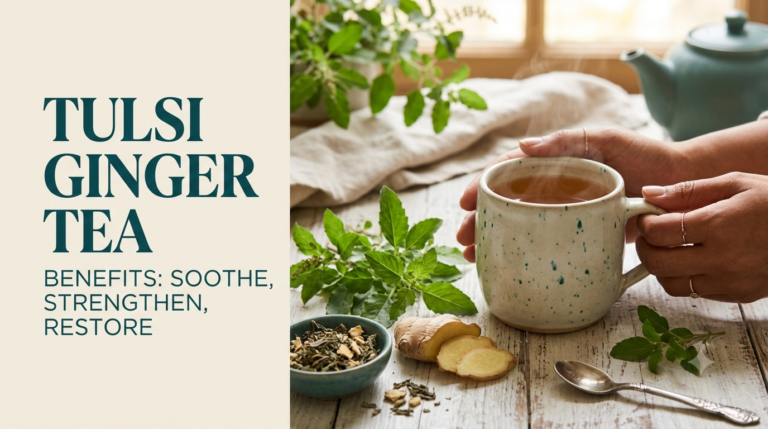
- Tulsi and ginger: Herbaceous, spicy and warming.
- Chamomile and lavender: Delicate, floral and aromatic.
- Fennel and mint: Fresh, fragrant and distinctive.
- Hibiscus and rose: Floral, tangy and vibrant.
- Butterfly pea and citrus: A distinctive blue infusion with fresh citrus notes.
Herbal infusions are often called herbal teas in everyday conversation, although they are botanically different from tea made with Camellia sinensis.
3. Herbal Infusion vs Regular Tea: At a Glance
| Feature | Traditional tea | Herbal infusion |
|---|---|---|
| Main ingredients | Leaves of Camellia sinensis | Herbs, flowers, spices, roots, seeds or fruits |
| Flavour | Grassy, malty, brisk, floral or roasted | Spicy, floral, fresh, fruity or earthy |
| Caffeine | Naturally contains caffeine unless decaffeinated | Usually caffeine-free, depending on ingredients |
| Colour | Often pale gold, green, amber or brown | Varies widely with the ingredients |
| Brewing | Temperature and steeping time depend on the tea | Temperature and steeping time depend on the blend |
| Variety | Different tea styles and processing methods | A broad range of individual botanicals and combinations |
Note: Some botanical ingredients, such as yerba mate, naturally contain caffeine. Always check the actual ingredients if caffeine content matters to you.
4. How Do Their Flavours Differ?
One of the most enjoyable differences is the variety of flavours available.
Traditional tea often has a recognisable tea-leaf character. Depending on its type, it may taste brisk, malty, grassy, delicate or roasted.
Herbal infusions, on the other hand, can explore a much wider range of sensory experiences:
Bold and spiced: Ginger, black pepper and warming spices bring depth and intensity.
Fresh and aromatic: Mint, fennel and lemongrass offer fragrant, refreshing notes.
Floral and delicate: Chamomile, lavender and rose introduce softer floral characteristics.
Fruity and tangy: Hibiscus and citrus can create bright, lively flavours.
There is no single flavour that defines an herbal infusion. Each blend has its own character, depending on the ingredients and their proportions.
5. Do Herbal Infusions Contain Caffeine?
Most herbal infusions made exclusively from caffeine-free botanicals do not naturally contain caffeine. Traditional black, green, white and oolong teas naturally contain caffeine unless they have been decaffeinated.
This distinction can help you choose a beverage that fits your preferences and daily routine.
However, the word “herbal” alone does not guarantee that a drink is caffeine-free. Some botanical ingredients contain caffeine, and some blends combine herbs with traditional tea leaves.
A simple tip: Check the ingredient list and product label rather than relying on the product name alone.
6. How Should You Brew Them?
Both traditional tea and herbal infusions are prepared by steeping ingredients in hot water, but the ideal brewing method depends on the ingredients.
For traditional tea, water temperature and steeping time can significantly influence bitterness, aroma and flavour.
For herbal infusions, the recommended method depends on whether the blend contains delicate flowers, leafy herbs, seeds, spices or roots.
For your best cup:
- Check the brewing instructions on the product packaging.
- Use the recommended quantity of tea or infusion.
- Follow the suggested water temperature and steeping time.
- Taste and adjust according to your preference.
For STAVIA pyramid tea bags, follow the instructions supplied with the specific blend to enjoy its intended flavour and aroma.
7. Which One Should You Choose?
The choice comes down to your personal taste and what you want from your everyday beverage.
Choose traditional tea if you enjoy:
- The familiar character of black, green or other tea varieties.
- A naturally caffeinated beverage, if that suits your preferences.
- Exploring different tea origins, processing styles and flavour profiles.
Explore herbal infusions if you enjoy:
- Discovering flavours from herbs, flowers, spices and fruits.
- Exploring blends that range from bold and warming to fresh and floral.
- Choosing caffeine-free options when the ingredients and product label confirm they contain no caffeine.
You do not have to choose just one. Traditional tea and herbal infusions can each have their place in your everyday routine.
8. Discover the STAVIA Approach
At STAVIA, our journey begins with herbal infusions inspired by the distinctive character of botanicals.
From the bold, spiced notes of Tulsi Ginger to the delicate floral character of Chamomile Lavender and the fresh aroma of Fennel Mint, our collection invites you to explore different flavours and find a blend you enjoy.
We believe that discovering new ingredients, taking a moment to prepare a cup and enjoying its aroma can make an everyday ritual feel a little more special.
And our vision extends beyond the cup. As STAVIA grows, we aspire to explore a wider range of food and wellness products, guided by thoughtful choices, quality and transparency.
Discover your flavour. Create your moment.
STAVIA — Naturally, Better.
Explore the STAVIA collection and find a blend that suits your taste.
Frequently Asked Questions
Is herbal infusion the same as regular tea?
No. Traditional tea comes from Camellia sinensis, while herbal infusions are made from other plants, such as herbs, flowers, spices and fruits.
Are all herbal infusions caffeine-free?
No. Most infusions made from common caffeine-free botanicals are naturally caffeine-free, but some botanical ingredients contain caffeine. Check the product’s ingredient list and label.
Which has a stronger flavour: regular tea or herbal infusion?
Neither is always stronger. Traditional tea can be brisk, malty or robust, while herbal infusions can be intensely spicy, floral, minty or tangy. Flavour depends on the ingredients and brewing method.
Can I drink herbal infusions hot or cold?
Many herbal infusions can be enjoyed hot or served chilled, depending on the blend and preparation instructions.
How do I choose an herbal infusion?
Start with flavours you enjoy. Choose spicy blends for warming notes, floral blends for delicate aromas, or mint-based blends for a fresh, aromatic character.
About STAVIA
STAVIA is a food and wellness brand inspired by nature, thoughtful product development and better everyday choices. Beginning with herbal infusions, we aim to create products that bring distinctive flavours and considered experiences to everyday living.
STAVIA — Naturally, Better.
Editorial note: The article’s factual distinction between traditional tea and herbal infusions is supported by the US National Center for Complementary and Integrative Health and Michigan State University’s Center for Research on Ingredient Safety.